















You are here
Front Page
FEATURED


Fausto Melotti and Lucio Fontana: New York Exhibitions Paving the Way for Contemporary Italian Artists
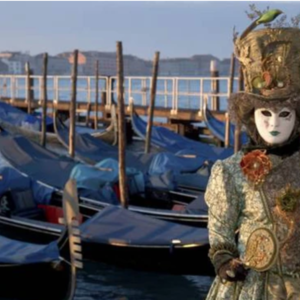
Verona's Romantic Aura Now Comes at a Cost
Mimosa May Fade but Italian Women Don't
March 8, Scuola d'Italia Celebrates Women at Its Annual Gala
Dacia Maraini, Memories From a Japanese War Camp
ACCOUNTING TODAY. Using Deferred Cash Bonus to Retain Employees
Chiara Izzi, Jazz Singer With A Mediterranean Voice
Sour Notes From Sanremo Festival Linger in the Air
Versatile Talent Chiara Izzi to Enchant "Birdland"
What Happens When You Leave Italy To Move Back To The US
When Rome Was Italy’s Film and Fashion Capital
Italian American Highlights From the 2019 Oscars
Rising on the Roman Skyline, Spires of Europe's Largest Mormon Temple
"Solid" Italian Economy Wins Positive Fitch Rating
Every Child Loves La Scuola
Sardinian Shepherds Spill Milk to Make Their Point
When Finding Your Italian Roots Becomes a Business
Moroni, #nofilter Renaissance Painter At The Frick
Lidia Matticchio Bastianich: Nostalgia and Success
Baroque Sicily. When History and Art Join Forces — and Win
| Join Our Free Newsletter |
Life & People
NEWSLINE
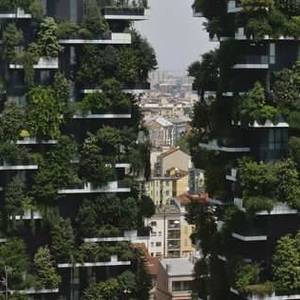
If Italy's fashion capital has a predominant color, it is gray—not only because of the blocks of neoclassical stone buildings for which the city is celebrated, but also due to its often-gray sky, which traps pollution.
Read more at: https://phys.org/news/2018-12-tree-milan-ambitious-cleaner-greener.html#jCp
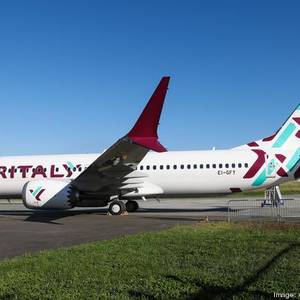
Air Italy, an upstart Italian air carrier founded early in 2018, on Tuesday said it will start nonstop service on May 14 between Chicago’s O’Hare International Airport and Milan, Italy’s Malpensa Airport. Air Italy will initially operate the new route three times weekly.
The Justice Department has helped many countries gain back their rightful cultural possessions. This is a case that doesn’t warrant its involvement.
Milan continues to outpace its Italian neighbors in home prices and sales volume, while the smaller areas in its orbit remain quiet and affordable.
Italy's fashion association issued an official statement in the face of accusations of irregular working conditions in the country.
From 2001 to 2017, the number of Americans speaking Italian at home dropped from almost 900,000 to just over 550,000, an incredible 38% reduction in just 16 years.
The company debuted its first Italian location in Milan in September, a high-end Starbucks Reserve Roastery. It opened two more locationsthis week.
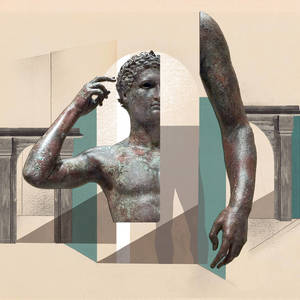
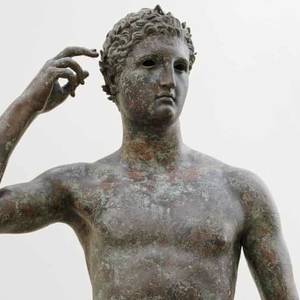
Institution vows to defend ‘legal right’ to Victorious Youth statue discovered off Pesaro in 1964
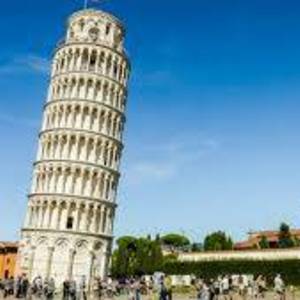
The Leaning Tower of Pisa is leaning a little less than it used to. The Italian monument, famed for its precarious tilt, has been improving its posture, straightening nearly 1.5 inches since 2001.
Xiang Kai, a director and writer based in Shanghai, burned more than $20,000 worth of Dolce & Gabbana products, including coats, a vest and bags. A previous fan of the brand, he said he also threw his shoes and watches from the label in the trash.
Pages
In Italiano


Donate & Subscribe!
Yum!
Photo News
Find Us on Facebook
Italy in NY Calendar
April 09
> Details
This conversation, part of the Italian Creators of our Times series, is with Luca Rossettini and Mauro Nardocci, the founders of two companies specializing, respectively, in cleaning the sky, D-Orbit, and the oceans, Seads (Sea Defence Solutions).
The pollution of our planet is one of the most pressing and difficult problems our society is facing. About 8 million tons of plastic enter the sea every year, and at this rate we foresee a future were, in the oceans, there will be more plastic than fish, by 2050. In the skies above us there are at least 7,500 tons of space junk, 'left overs" from old satellites, that represent a serious threat because of the risk of colliding with active satellites and/or space stations.
Italians are pioneers in the creation and implementation of technologies and devices geared toward environmental clean up, greatly contributing much needed solutions to this difficult and problematic issue.
Luca Rossettini is the founder and ceo of D-Orbit. He has a master in Aerospace Engineering, a master in Strategic Leadership Towards Sustainability, and a Ph.D. in Advanced Space Propulsion. He has always loved working in the space sector, so much so that he even applied for the European Astronauts Corp, positioning himself among the first two hundred candidates out of 10,000. But the call to be a serial entrepreneur was stronger, and in 2011 he founded D-Orbit, a company that offers solutions to eliminate the Space Debris.
Mauro Nardocci is a partner of SEADS and its Communication director. He has a bachelor degree in Computer Engineering and a master degree in Management Engineering. He has worked in Luxembourg, Singapore, Germany, and of course Italy. He is also an executive coaching, and leadership expert.
April 10
> Details
The year 1920 marked the turning-point in Italy’s postwar crisis. Left-wing agitation and the threat of revolution reached their climax in September 1920, with the occupation of Italy’s largest factories by the workers. In Turin, Antonio Gramsci emerged as the theorist of the factory council movement as an authentic expression of the revolutionary proletariat. A minority of the Futurists responded by forging links with the Proletkult movement in the Soviet Union. However, Soviet collectivism troubled Marinetti, and many artists, who reasserted the primacy of the individual
However, the failure of the Socialist leadership to seize the occasion to convert their revolutionary rhetoric into action led to profound disillusionment, and to the secession of the left wing of the Socialist party, completed at the Congress of Livorno in January 1921 with the foundation of the Italian Communist party.
The reaction was not long in coming. It started not in the industrial cities but in provincial cities like Bologna and Ferrara, and in their rural hinterland, where the control exercised by the Socialist movement through their organization of agricultural laborers posed an even greater threat to property than the working-class movement in the cities. The reaction took the form of squadrismo: the armed action of the squads organized by the Fascist movement, which won its first symbolic victory with the occupation of the town hall of Bologna, and the expulsion of the newly elected Socialist council. The Fascist movement attracted wide sympathy from those who saw it as a legitimate patriotic response Socialist internationalism and a “defeatist” refusal to celebrate Italy’s victory in 1918. The artist Ottone Rosai was a typical representative of this tendency. However, even as the Fascist movement continued to expand rapidly, some of its original adherents dissociated themselves from it, on the grounds that it no longer represented the cause of “national revolution,” and had become the tool of social reaction.
The rapid political changes of 1920 left many artists perplexed, dissatisfied with the major artistic movements (Futurism or Metafisica) and searching for new directions. Mario Sironi, while refusing any idea of a return to the past, abandoned the optimism of the early Futurists in favor of a stark and pessimistic vision of the new urban reality, while actively contributing as a cartoonist to Mussolini’s Popolo d’Italia. Giorgio Morandi turned away from the public sphere of controversy and sought his inspiration in an intensely private and solitary vision.
Adrian Lyttelton is Professor of History at the Johns Hopkins University Center in Bologna. His previous appointments include Professor of Modern History, University of Reading; Resident Professor of History, Bologna Center; Professor of European History, University of Pisa. He has been Visiting Professor at the University of California, Berkeley and at the American Academy in Rome. He is the author of The Seizure of Power: Fascism in Italy 1919–1929 as well as of many other publications on the Twentieth century Italian and European History.
FREE for CIMA members and students. Registration required.
RESERVE A SEAT!
Please note: CIMA will be live-streaming the program on our Facebook page.
Program schedule:
6pm – registration, aperitivo, and viewing of Metaphysical Masterpieces
6:15pm – program begins, followed by audience Q&A
8pm – evening concludes
April 11
> Details
In Whom We Shall Welcome (Fordham University Press, 2019), Danielle Battisti examines post–World War II immigration by Italians to the United States. The book looks at efforts by Italian American organizations to foster Italian immigration along with the lobbying efforts of others in the community to change the quota laws. While Italian Americans (and other white ethnics) had attained virtual political and social equality with many other ethnic populations by the end of the war, Italians nonetheless continued to be classified as undesirable immigrants. Battisti’s work is an important contribution toward understanding the construction of Italian American racial/ethnic identity in this period, the role of ethnic groups in U.S. foreign policy in the Cold War era, and the history of the liberal immigration-reform movement that led to the 1965 Immigration Act. Whom We Shall Welcome makes significant contributions to histories of migration and ethnicity, post–World War II liberalism, and immigration policy.
April 13
> Details
The Center for Italian Modern Art is pleased to announce a workshop, for children age 6 -11, led by museum educators and scholars in residence. By incorporating close observation with guided conversation and an artistic activity, children develop meaningful and lasting relationships with art in an intimate exhibition environment.
Children explore the exhibition, Metaphysical Masterpieces 1916-1920, Morandi, Sironi and Carrà, and discover how Giorgio Morandi sees and interprets ordinary objects of everyday life. Working with crayons, colored pencils and artisanal papers, participants will use their newfound knowledge from the exhibition, to make their own representation around the question: what makes a still life painting, a still life?
RSVP REQUIRED
(Please note 1 reservation admits an adult and a child)
Schedule
3:30pm — Welcome
3.45pm — Start of the activity: Tour of the exhibition and Workshop with creative activity
5.15pm — End of program
Please note: At least one caretaker must remain at CIMA for the entire duration of the program. While the children are engaged in their creative activity, caretakers are invited to enjoy an Italian coffee, read books from CIMA’s library, peruse newspapers or tour CIMA’s Metaphysical Masterpieces, 1916–1920: Morandi, Sironi, and Carrà exhibition.
Franca Bombieri was born and raised in Italy where she attended the Liceo Artistico (Art School) in Venice. She continued her studies at Ca’ Foscari University, and later received her Bachelors Degree in Liberal Arts with concentration in Art History in New York City. In New York, Franca taught at the Rudolf Steiner School for fifteen years during which she also traveled to Kenya for three consecutive summers to work with the Samburu Tribe, developing a school program that would reflect their culture.
Franca has been able to fuse together her formal education with her experience as a teacher by teaching art classes to children and their care-givers at the Art Barge, the Victor d’Amico Institute of Art in Amagansett NY. Franca’s passion has been finding ways to communicate art to children and teenagers based on cognitive development, as she believes that art is a powerful form of expression that delivers and fosters communication. She has been a volunteer at the Metropolitan Museum of Art in the Access Department of Education for these past five years, and is currently enrolled in the Docent Program.
FAQs:
Can I leave my child?
At least one caretaker must remain at CIMA for the entire duration of the program. We invite you to relax, enjoy an espresso, our exhibition and library during this time.
Will you have programs for other ages?
CIMA is expanding its family programs and will be posting new events and activities for additional age groups.
Please contact [email protected] for any further questions.
April 17
> Details
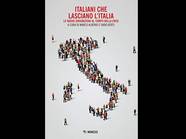
Between the late 19th and early 20th centuries, hundreds of thousands of Italians left their country for the Americas. This performance uses words and music to tell their story: a story of hope and creativity that ended up changing those new lands into an appendix of the Italian motherland. This tale is told thanks to the songs of those migrants and their voyages, from Mamma mia dammi cento lire to Ma se ghe penso, from Ciao Turin to Tragico naufragio del vapore Sirio.
Elena Buttiero, piano
Ferdinando Molteni, vocals and guitar
In ENGLISH (songs in Italian)
Produced by Associazione Culturale Allegro con Moto
Organized in collaboration with the Associazione Liguri nel Mondo (New York Chapter)
Elena Buttiero, a graduate of the Conservatorio in Turin, is a musician and professor. She plays the piano, spinet, and celtic harp. She has recorded two albums with Birkin Tree (Continental Reel, A Cheap Present), two with mandolin player Carlo Aonzo (Il mandolino italiano nel Settecento, Fantasia poetica), and one with the Arethusa Consortium trio. She has toured all across Europe, the United States, where she plays regularly, in Tanzania (Dar es Salaam and Zanzibar), in Canada, Argentina, and Uruguay. She recently was pianist for the performance, Luigi Tenco: L'ultima notte, directed by and starring Roberto Tesconi. Buttieri has written solfège and piano teaching methods published by Edizioni Carisch. She released two albums with Ferdinando Molteni, Saluti dall'Italia and Lontano nel mondo.
Ferdinando Molteni is a writer and musician, and has published about twenty volumes with publishing houses such as Vallecchi, Electa, and Arcana. He has written and still writes on culture in 20th century Genoa, on Giuliano Ferrara's Foglio, and on Enrico Deaglio's Diario. His latest essays include Controsole: Fabrizio De André and Crueza de ma (Arcana), and L'ultimo giorno di Luigi Tenco (Giunti). Molteni has written the text for La strana morte di un cantautore for Massimo Ghini (appearing on Raidue in the series, Delitti rock), as well as the first act for Luigi Tenco: L'ultima notte for Roberto Tesconi (De Ferrari Editore). As a musician, Molteni is a songwriter and also plays traditional music. He has played concerts in Italy, Switzerland, France, Tanzania (Dar es Salaam and Zanzibar), the United States, Argentina, and Uruguary. He recorded an album with the Arethusa Consortium trio. He released two albums with Elena Buttiero, Saluti dall'Italia andLontano nel mondo.
Pages
Bloggers
Occhio contro occhio
Wine and Food
Raccogli e passa
Traces
Attraverso
Widescreens
This Will Make You Happy
i-ItalyNY | Magazine
Find a free copy at the best Italian stores, restaurants and wine bars and at all Italian events in town.
OR CLICK HERE TO SUBSCRIBE AND BECOME MEMBER OF THE CLUB!