












Culture in the Temple of Food


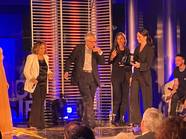
You are one of the honorees selected by the Columbus Foundation for 2016. What does this mean to you personally and to the impact of Italian Americans on cuisine?


I’ve spent a great deal of my career educating people on the nuances of authentic regional Italian cuisine; helping people realize Italian food is much more than pizza and spaghetti with meatballs. I’m honored to represent the Italian American community as it has evolved from immigrants to leaders in culture, commerce, gastronomy, sports, politics and the arts.
Tell us about your family. Where did they come from in Italy?
Our family’s roots are almost entirely in the West. My grandmother was from Chieti in Abruzzo and my grandfatherwas from Lucca, Italy, inToscana. Bothregions have a rich tradition in food, but that is just a part of the rich fabric of culture we can share.
Is there a traditional dish that was prepared in your family and that you remember with particular pleasure?
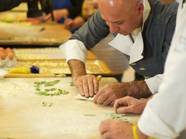
I learned a lot about cooking, tradition and family from my grandma Leonetta. She was undeniably the best cook in the Batali household and her calves brain ravioli with oxtail ragu were legendary. My dad and I often discuss even now how pure and perfect her pasta-making technique was. Every year around Christmas time I make her dish for the boys and my wife Susi. It’s pretty incredible how nostalgic food can warm your heart.
Your passion for cuisine and Italian food was born in the family. Your father Armando Batali was an engineer at Boeing; when he retired, he decided to open a European- style “salumeria.” Tell us something about your family connection with food.
My grandparents were close by and we saw them weekly all of my childhood, as were my aunts, uncles, and cousins. We spent a lot of time up in Yakima berry picking, cooking, playing outside at my grandfathers’ hop ranch – just being kids. My parents were self-taught picklers and taught us very early on how to conserve food through pickling.
When did you decide to become a chef? And how did it happen?
When I started it wasn’t such a fashionable profession as it is today... I like to joke that becoming a cook was the job you took after you leave the army and before you headed to prison. It wasn’t a glamorous career and certainly the idea of a celebrity chef when I was growing up was never a thing. I really didn’t know what I wanted to do. When I was at Rutgers I got my rst restaurant job at Stuff Yer Face and that’s when I realized how much I loved being in the kitchen and cooking.
Your partnership with the Bastianich and Farinetti families in the founding of Eataly was an important step in your career. What impact did this have on the food scene in New York?
We just opened a second Eataly NYC location downtown by the World Trade Center in August of this year. The way New Yorkers have received the concept of the Italian marketplace is thrilling. I think it’s been an inspirational model for a lot of openings within the last few years here of fancy food halls and marketplaces with restaurants and vendors inside.
The relationship of Americans to Italian food and cuisine has changed a lot over the years and and some of the credit goes to you. Is there a contribution you made to this effect that you are particularly proud of?
My cooking style has been inspired by authentic Italian cooking with recipes of my grandmother’s and the Italian purists I studied under when
I lived in Italy. So I’m proud, naturally, to have brought that authenticity here, but I’m not the only one who can take credit.
Tell us about the Mario Batali Foundation. What does it do and how did you decide to enter the world of philanthropy?
My foundation helps ensure that all children are well read, well fed, and well cared for in today’s evolving landscape. Over the years we’ve helped impoverished families live more ful lling and healthier lifestyles as well as gain the necessary resources to prepare their own healthy meals. We’ve also opened libraries in collaboration with Books for Kids in New York, Nevada, and California among other projects. Philanthropy is important to me because I intensely believe that social change is not only possible, but is necessary.
In conclusion, would you tell us just a few words on the recent earthquake in Italy and how the Italian food scene in New York is reacting?
The town of Amatrice is considered by many Italians to be the birthplace of the best cooks on the peninsula. Many dishes at the heart of Roman cooking, and certainly of my menus, are inspired by the people of Amatrice and their insanely talented gift to create dishes like bucatini all’Amatriciana. To support the relief efforts for the earthquake in Italy, Joe and I through our B and B Hospitality Group will donate $5 for every Bucatini all’Amatriciana sold through September. All of our restaurants that serve the dish will participate, that’s Lupa, Osteria Mozza, La Sirena, Babbo, Babbo Pizzeria, OTTO Las Vegas, B&B Ristorante, Carnevino, and Del Posto. Some of our other restaurants, including Tarry Lodge, plan to run the dish as a special. For every bowl of Bucatini all’ Amatriciana sold at our restaurants this month, we’ll donate $5 to the earthquake relief efforts.
i-Italy
Facebook
Google+
This work may not be reproduced, in whole or in part, without prior written permission.
Questo lavoro non può essere riprodotto, in tutto o in parte, senza permesso scritto.